Buying a Lake Keowee area lot from Salem can be exciting, but it is very different from buying a move-in-ready home. A beautiful view or quiet road does not automatically mean a parcel can support the house, driveway, utilities, and shoreline features you have in mind. If you want to buy with confidence, you need to know what to verify before you fall in love with the lot. Let’s dive in.
Why Lake Keowee lots need more due diligence
In the Salem area, lot research often involves more than one local authority. The Town of Salem publishes basic utility information, while Oconee County handles much of the land-use process through GIS, planning and zoning, building codes, addressing, and roads-related offices.
Lake Keowee adds another layer. Duke Energy describes the Keowee-Toxaway hydroelectric project as having roughly 480 miles of shoreline, and shoreline parcels can be affected by both county rules and lake-specific shoreline rules. That means your lot may be purchasable, but still require extra review before it is truly buildable for your plans.
Start with the parcel records
Before you think about house plans, start with the parcel itself. Oconee County’s GIS tools provide web maps, parcel viewer tools, property record search, and access to titles and deeds resources, making them a practical first stop for research.
This step helps you confirm the basics, including parcel boundaries, ownership, and surrounding map context. It can also help you spot early issues that may affect how you use the land.
What to confirm first
- Parcel boundaries
- Current ownership
- Deed and property record details
- Nearby road layout
- General lot shape and map position
Check legal access and addressability
A lake-area lot is far less useful if access is unclear. You will want to confirm whether the parcel has public road frontage, access from a private road, or access through an easement.
In Oconee County, Roads & Bridges is the local contact for road questions. The county’s Addressing office handles E-911 addressing and compliant address numbers for new sites, which matters when you are planning a future build.
Why access questions matter
Access affects more than convenience. It can influence where a driveway can go, how emergency services identify the property, and whether your building plans are practical.
Verify zoning and private restrictions separately
It is easy to assume that a lake-area lot is ready for your intended use, but that is not always the case. Oconee County states that all land is in the Control Free District until rezoned, and parcel zoning can be checked through the county GIS parcel viewer.
The county also says it does not enforce private covenants and restrictions. So if the lot is subject to HOA rules or deed restrictions, those need to be reviewed separately from county zoning and lake approvals.
Keep these rules categories separate
- County zoning determines the local zoning status of the parcel.
- Private covenants or HOA rules may limit design, use, or site changes.
- Lake or shoreline rules may apply if the property touches Duke Energy project areas.
These are not the same thing, and each one can affect what you can build.
Study topography and soils early
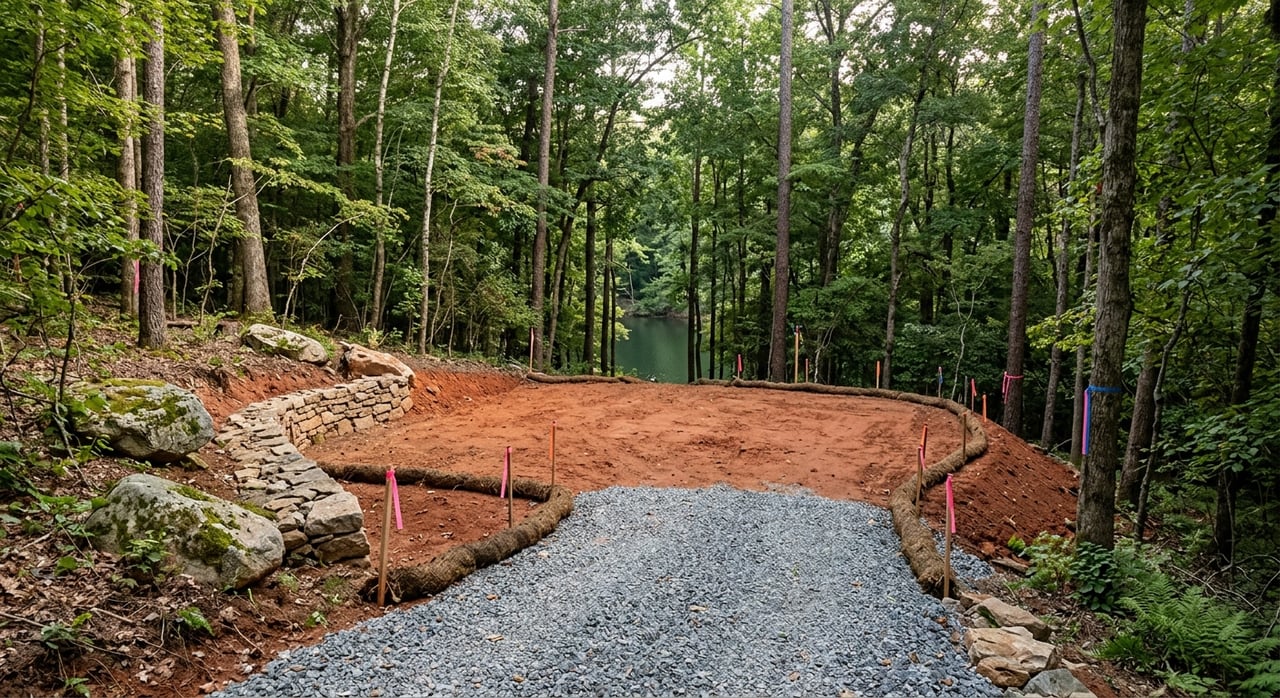
Some of the most expensive surprises on raw land come from the ground itself. South Carolina Department of Environmental Services advises buyers to watch for rocky ground, steep slopes, wet areas, flooding, wetlands, and fill dirt because these conditions can make septic installation difficult or even impossible.
The official current source for soil information is the NRCS Web Soil Survey, but NRCS also notes that an onsite investigation may still be needed for detailed suitability questions. In simple terms, a lot that looks great in photos may still need major grading or an engineered septic solution.
Red flags to notice on a lot
- Steep slopes
- Wet or soggy areas
- Signs of fill dirt
- Rocky terrain
- Low-lying sections
- Possible wetlands or flood-prone spots
Ask the big utility questions
Utilities are where lot buying becomes very practical, very fast. Salem’s website includes local utility information and lists water services, along with Blue Ridge Electric Cooperative and Duke Power as utility contacts. Still, you should verify service availability for the specific parcel rather than assume a nearby line serves the lot.
South Carolina Department of Environmental Services says buyers should confirm water and sewer availability with local government before buying land. If there is no public sewer, a septic system will be needed. If there is no public water, a residential well will be needed.
Water and sewer checklist
Before you buy, try to get clear answers to these questions:
- Is public water available to this parcel?
- Is public sewer available to this parcel?
- If not, will a well be required?
- If not, will a septic system be required?
- Are there site conditions that may increase installation cost?
Septic can make or break buildability
For many Salem and Lake Keowee area lots, septic is the key buildability issue. SCDES requires site approval and a permit for septic systems, and the county cannot issue a building permit for a septic-served home until the septic permit is in place.
If a conventional septic system will not work, an engineered system may be required, and that can cost substantially more. This is one of the main reasons a low-priced lot can turn into a much more expensive project than expected.
If the lot needs a well
If public water is not available, a private residential well may be necessary. SCDES requires permitting for new private residential wells and says the well must be drilled by a South Carolina certified well driller.
SCDES also states that it does not regulate the water quality of private wells. That means water testing remains the homeowner’s responsibility.
Screen flood risk before you commit
Flood risk should be part of your early screening, not an afterthought. FEMA says its Flood Map Service Center is the official online source for flood hazard maps used by the National Flood Insurance Program.
FEMA also recommends contacting the local floodplain administrator, often a planning or zoning official, before making changes. For a buyer, this can affect both building decisions and future ownership costs.
Understand shoreline rules before you buy
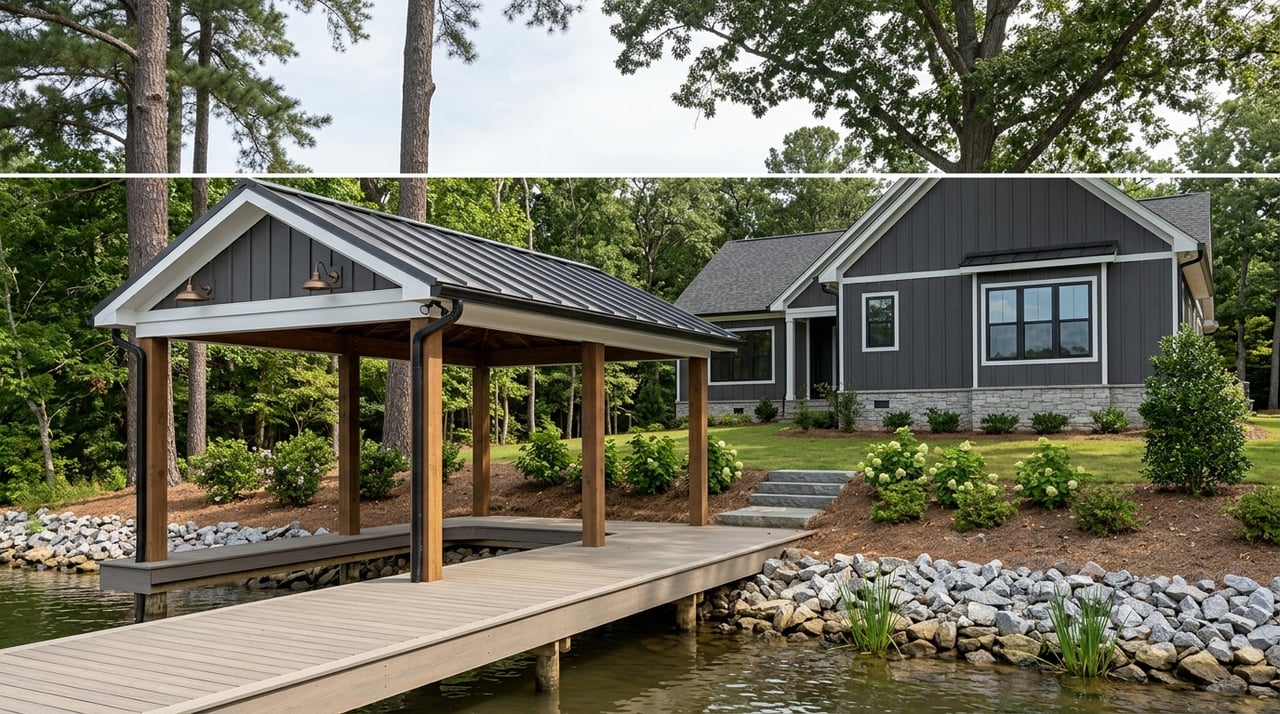
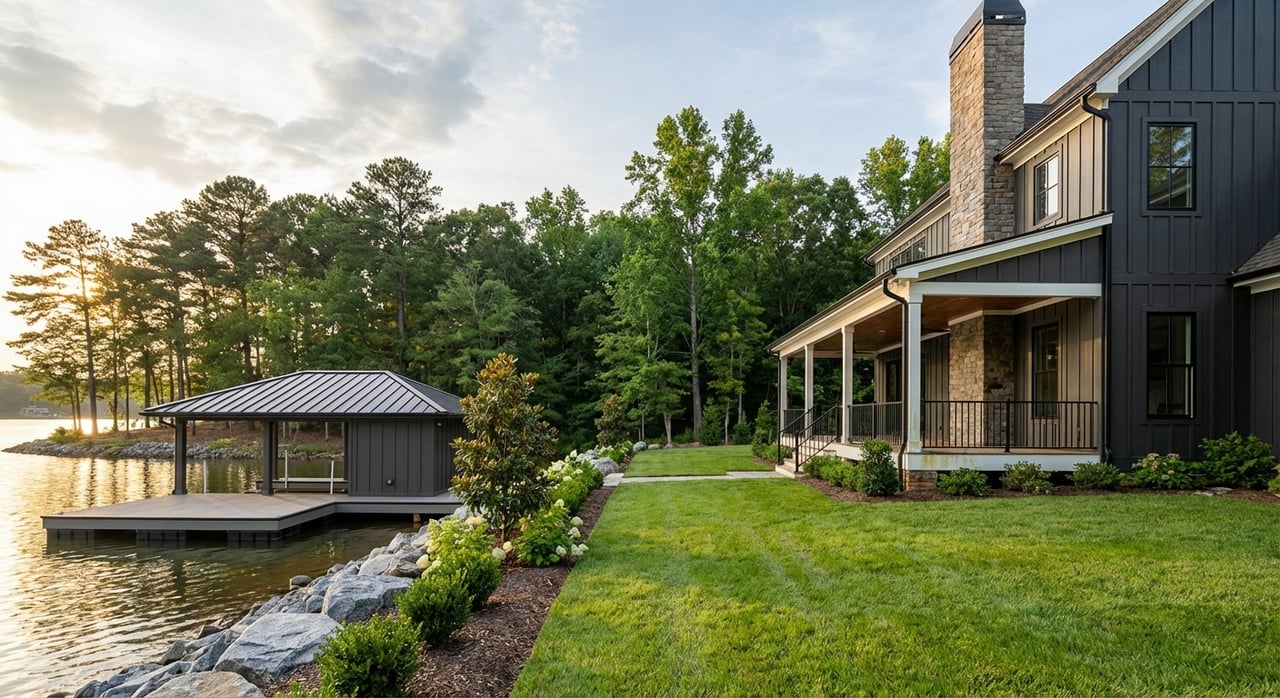
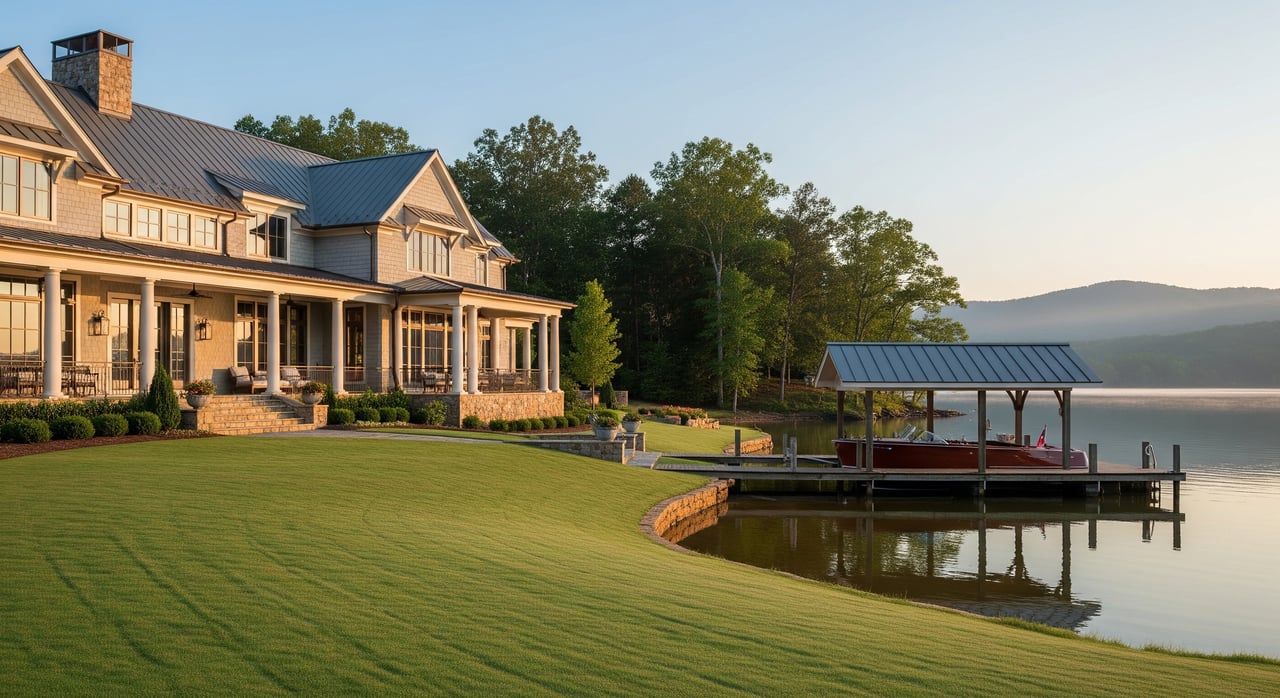
If the lot touches Duke Energy property or any planned work affects the shoreline, Duke’s Keowee-Toxaway Shoreline Management Plan comes into play. According to Duke Energy, the plan applies to construction, shoreline stabilization, and excavation within the lake boundary.
This matters because shoreline improvements often involve more paperwork than buyers expect. A permit application may require a registered survey, a plan and profile drawing, local building permits, and a state shoreline stabilization permit.
Shoreline work may include
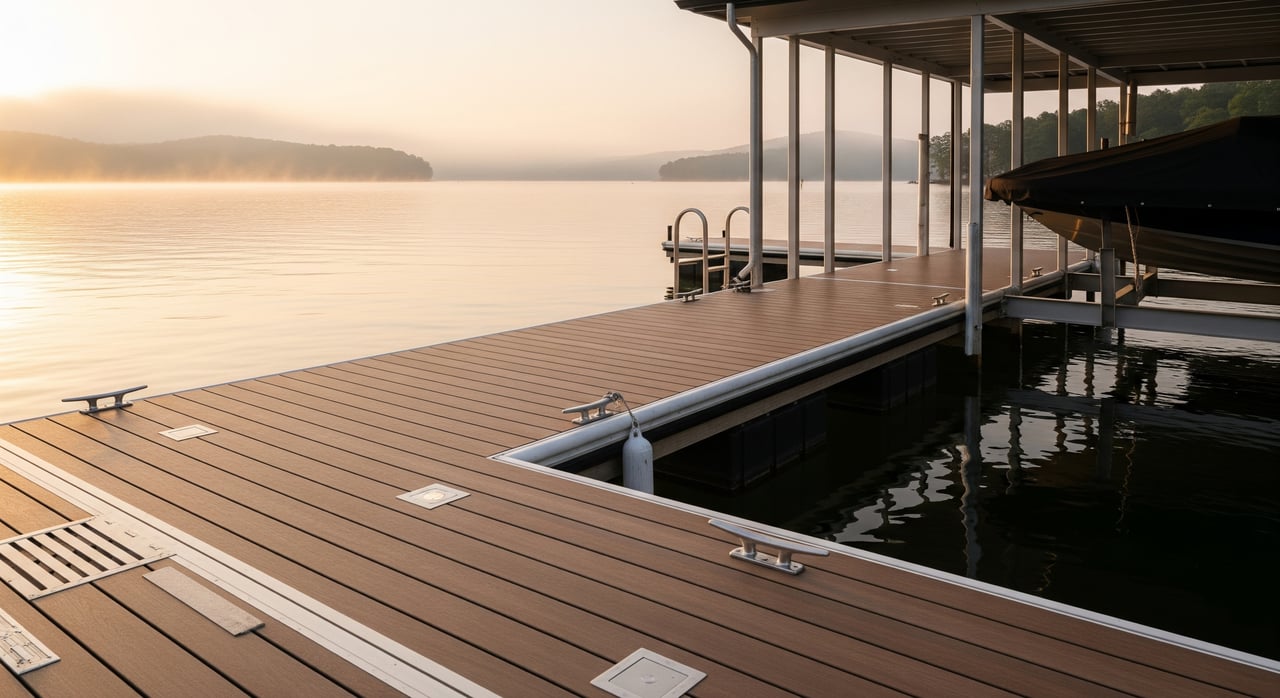
- Dock-related improvements
- Shoreline stabilization
- Excavation near the lake boundary
- Clearing tied to shoreline access
- Work involving Duke-owned access areas
Duke Energy also notes that contractors using Duke-owned access areas for shoreline projects need an Access Area Use permit. If materials or equipment need to move through Duke property or by water, that approval may be required too.
Do not judge the lot by one lake-level snapshot
A single property visit can be misleading, especially on Lake Keowee. Duke Energy says lake levels can vary across the reservoir and can change rapidly, and during high inflow events, actual water elevations can be substantially above the dam reading.
That means a dock site, path to the water, or shoreline slope should not be judged by one calm-day showing. If waterfront access is a major priority for you, this point deserves extra attention.
Know the county permit process
If you plan to build a new home, Oconee County says a building permit must be issued before new construction or major alterations begin. The county also notes that plan review is required for commercial construction, single-family homes over 5,000 square feet, and projects using alternate construction methods or engineering.
That does not mean every lot is a bad candidate. It simply means your due diligence should line up with the local process before you move forward.
A smart order for lot due diligence
When you are comparing lots from Salem into the Lake Keowee area, a good process can save you time and money. Based on the local rules and approvals involved, this is a practical order to follow.
Recommended due diligence sequence
- Review the parcel in Oconee County GIS.
- Confirm legal access, road questions, and addressability.
- Check zoning status.
- Review any deed restrictions or HOA covenants separately.
- Verify public water and sewer, or confirm well and septic needs.
- Screen topography, soils, wet areas, and flood risk.
- Ask Duke Energy about shoreline work if the lot is on or near the lake.
This order helps you focus on whether the lot works on paper before you spend heavily on plans or assume the site fits your goals.
What makes a lot a strong opportunity
A strong lot is not just attractive from the road. It is a parcel where access, zoning, utility options, site conditions, and any shoreline limitations line up in a workable way.
That is especially true in the Salem and Lake Keowee market, where lake access and custom-home potential can be very appealing. The real value of the lot depends on whether it supports your plans without major surprises.
If you are considering land near Lake Keowee, local guidance can make the process much clearer. The team at Thomas & Crain Team at Keller Williams Drive can help you evaluate lots, understand the local steps, and move forward with more confidence.
FAQs
What should you check first when buying a Salem-area lot near Lake Keowee?
- Start with Oconee County GIS and property records to review parcel boundaries, ownership, map context, and deed-related information.
How do you know if a Lake Keowee area lot has legal access?
- You should confirm whether the lot has public road frontage, private road access, or an easement, then verify road and addressing details with Oconee County if needed.
Why is septic approval important for buying land in Oconee County?
- If a lot does not have public sewer, septic approval is central to buildability because SCDES requires site approval and a permit, and the county cannot issue a building permit for a septic-served home first.
Do shoreline lots near Lake Keowee need Duke Energy approval?
- If planned work touches Duke Energy property or affects the shoreline within the lake boundary, Duke Energy review and permits are generally required.
How do flood maps affect buying a lot near Salem, South Carolina?
- Flood maps can help you screen for flood-prone areas that may affect building decisions, site planning, and future ownership costs.
Are county zoning rules the same as HOA rules for Salem and Lake Keowee lots?
- No, county zoning and private covenants are separate, and Oconee County does not enforce private covenants or restrictions.
Can you assume town utilities are available to every lot near Salem?
- No, you should verify water, sewer, electric, and gas availability for the specific parcel rather than assume service reaches the site.