On Tuesday, November 3, 2026, City of Seneca voters decide whether to add a 1% sales and use tax for eight years. Under the plan, 55% of the money would go to credits against City property taxes on owner-occupied homes. The other 45% would pay for a capped list of capital projects, built pay-as-you-go with no borrowing. The City says the goal is to "substantially offset, and possibly totally eliminate" City property taxes on those homes.
That goal is real, but it covers fewer homes than "Seneca" suggests on a map. It also covers a bigger share of each qualifying bill than most newcomers would guess. Both points come from how South Carolina already taxes a primary home, and both matter if you're comparing Seneca with Clemson, Walhalla or the lake.
Three filters stand between a house and the credit
The City's own FAQ sets the eligibility rules. Each one removes a group of properties that a buyer might reasonably think of as being in Seneca.
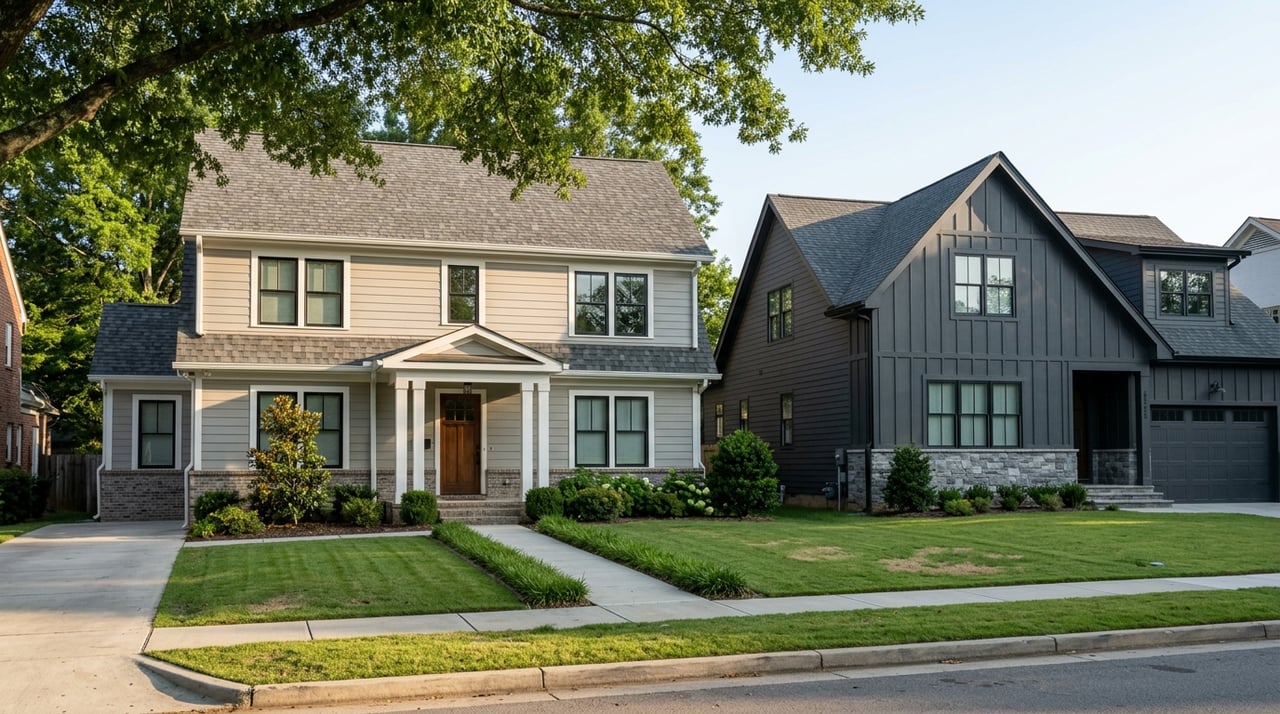
- City limits, not mailing address. The credit applies only to homes inside Seneca's city limits. A Seneca postal address on a property outside those limits does not qualify.
- The 4% legal residence classification. Only property assessed at the 4% legal-residence ratio qualifies, which means an owner-occupied primary home. Second homes, rentals and commercial property assessed at 6% get no credit. City Administrator Scott Moulder told council that vacant land and apartments are left out too. "It's only 4 percent primary residence owner-occupied," he said.
- The City line only. The credit offsets the City of Seneca municipal tax, currently 72 operating mills. Oconee County, school district and other lines on the bill stay the same.
The City says no separate application to the City is expected. The credit would show up as a line item on the municipal portion of the bill, but the property must already hold the 4% classification with Oconee County. Your classification is printed on your Oconee County tax bill. For a buyer, that bill is the first document to pull on any Seneca address.
The third filter sounds like a limit. On a primary home, it reaches about two-fifths of the bill.
"City taxes only" sounds small until you see how South Carolina treats owner-occupied homes. Under the 2006 law known as Act 388, a qualifying primary residence is exempt from school operating taxes but still pays school debt service. In Oconee County's 2025–2026 schedule, school operations is the biggest single levy at 110 mills, with another 28.6 mills for school bonds. On a 4% home, that 110 mills drops off the bill, so the City's share grows.
Here's a rough example for a $100,000 property tax value. It pairs the City's new 72 mills with the county's 2025–2026 incorporated rate of 73.4 mills and the school rates above.
| Line item | 4% owner-occupied | 6% second home or rental |
|---|---|---|
| City of Seneca, 72 mills | $288.00 | $432.00 |
| Oconee County, 73.4 mills | $293.60 | $440.40 |
| School operations, 110 mills | exempt | $660.00 |
| School bonds, 28.6 mills | $114.40 | $171.60 |
| City share of the total | about 41% | about 25% |
Treat these shares as estimates, since they mix tax years. Oconee County reassessed for 2026. County staff told council the rollback came to 73.7 mills, described as a 2.6-mill cut for the county and a 3.1-mill cut for the school district, and council adopted it. Some parcels also pay fire district levies, depending on their tax district. The overall picture holds anyway. For an in-city owner-occupant, the City line is about as big as the county line. For a 6% owner, it's about a quarter of the bill, and that owner gets no credit at all.
The City line also just went up. The FY2026–27 budget raised the City rate from 69.7 to 72 mills.
What the City projects for Year 1
The credit formula comes from the Act. Each year, 55% of net sales tax revenue is divided by the total property tax value of every owner-occupied home in the city, which the Oconee County Assessor puts at about $548.4 million for Year 1. That produces one citywide rate, and every qualifying home applies it to its own value. Under the Year 1 estimates, the rate is 0.4026%.
| Property tax value | City tax at 72 mills | Projected credit | Carries forward |
|---|---|---|---|
| $150,000 | $432.00 | $603.88 | $171.88 |
| $250,000 | $720.00 | $1,006.47 | $286.47 |
| $350,000 | $1,008.00 | $1,409.06 | $401.06 |
| $500,000 | $1,440.00 | $2,012.94 | $572.94 |
| $750,000 | $2,160.00 | $3,019.41 | $859.41 |
In every row, the projected credit is bigger than the City tax, so the projected City bill is $0. Unused credit can roll forward for up to three property tax years. It's nonrefundable, so it never comes back as cash, and anything still unused after three years is lost. Owners with the $50,000 Homestead Exemption for those 65 and older, blind or disabled get the credit on the home's full value. On a $350,000 home, the City projects an $864 City bill, the same $1,409.06 credit, and $545.06 carried forward.
The 55% figure is about margin. The Municipal Tax Relief Act requires at least 20% for relief. City staff modeled the share it would take to wipe out City taxes on owner-occupied homes each year, assuming 3% revenue growth and 125 new homes a year. The required share rises over the term and peaks at 52.41% in Year 8, because the tax base is projected to grow faster than revenue. The 55% share is locked for the full term, and the City is clear that this is no guarantee of a $0 bill. In leaner years, any shortfall shows up on homeowners' bills.
Who pays the penny
If voters approve it, the rate on taxable purchases inside Seneca goes from 6% to 7%. SNAP-eligible groceries stay exempt, along with prescription medicine, motor fuel and anything else already exempt from state sales tax.
That's why the math works. City officials told WSPA they expect 40% to 60% of the revenue to come from visitors. Mayor Ronnie O'Kelley noted that Seneca is a town of about 8,300 people, while about 40,000 vehicles travel the U.S. 123 Bypass every day.
So every shopper pays the penny, but only one group gets the credit back. A lake homeowner whose house is classified at 6%, or a landlord with a rental on the city's edge, pays 7% at Seneca registers and sees no change on the City line of their own bill. An owner-occupant just outside city limits with a Seneca address pays the same 7% when shopping in town and gets no credit either.
Where the other 45% goes
The capital side runs through tiers. A first-priority set-aside of $500,000 a year goes to road paving, drainage, sidewalks and public parking lots, capped at $4 million. Then comes Tier 1, capped at $12 million:
- Gignilliat Community Center, $4.25 million
- Fire station upfit and equipment, $2.5 million
- Historical Seneca Depot project, $2 million
- Cunningham Park, $1.25 million
- Cemetery rehabilitation, $1 million
- Cherry Road water-line expansion, $1 million
Tier 2 adds $15.375 million in reserve projects: a $6 million downtown streetscape, $4.5 million for water meter replacement, $2.5 million for the Shaver Recreation Complex, $2 million for Blue Ridge Park, and $375,000 for park shelters. All authorized projects add up to $31.375 million, which is more than the roughly $16.1 million in capital receipts the City projects. Tier 2 moves forward only if the money is there. Councilman Dan Alexander said some residents had asked whether the City could spend the money however it liked. "What we're voting on tonight is exactly what it has to be and the time frame," he said.
What this means for a Seneca home over the next eight years
If approved, the tax would run from May 1, 2027, through April 30, 2035, and end automatically unless voters approve it again. That window lines up with how long many buyers keep a home. During that time, two houses with the same price could carry very different holding costs. The difference comes down to which side of the city limit line each one sits on and whether the owner lives there.
That makes a few checks worth doing on any Seneca address. Confirm it's inside city limits on the county tax record instead of trusting the mailing address. Check the current classification, keeping in mind the 4% rate depends on the owner living in the home. Look at the City line on the most recent bill, because that's the amount the credit is designed to offset. Seneca may not stay unique, either. O'Kelley told WSPA he had talked with other Oconee County mayors, including Walhalla's, who were considering similar ordinances.
The City holds informational sessions every Wednesday from 5:30 to 6:30 p.m. in Council Chambers at Seneca City Hall, 221 E. North 1st Street, through October 28, with no registration needed. Its tax relief page has the full plan and a credit estimator.
Quick answers
Does the credit touch my county or school taxes? No. It offsets only the City of Seneca line.
What if my credit is bigger than my City bill? Your City bill goes to $0, and the rest rolls forward for up to three property tax years.
Where does the law come from? It's the Municipal Tax Relief Act, S.866, approved on May 19, 2026.
Wondering where a specific Seneca address lands on city limits, classification and the City line? Thomas & Crain Real Estate can pull the tax record with you and show what the November 3 vote would and wouldn't change for that property. Start with a Free Home Valuation, and we'll go through the tax side together.
This article is general information, not legal, tax or financial advice. Consult a qualified professional about your situation.